

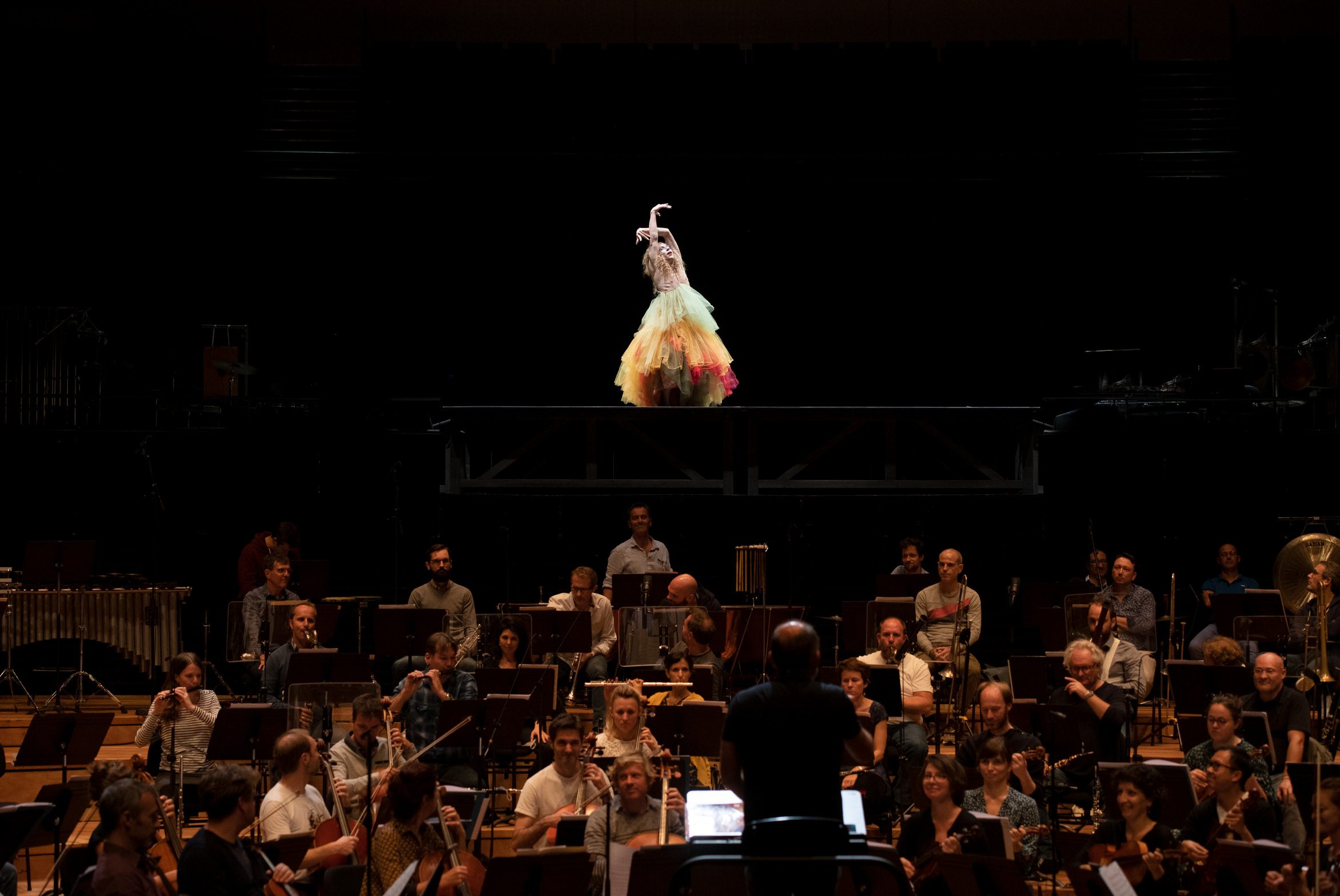
Un Bolero is an artistic endeavor written with two voices. Francois Chaignaud, a fascinating interpreter and among the most remarkable choreographers, accompanies me in the creation of this dance. We have taken special interest in Spanish dances (bolero, fandango, flamenco…) as well as their remakes and mutations towards the “revolt of the flesh” of certain Butoh dancers of the 1960s. I will formalize the measures of composition of the dance, while Chaignaud will interpret on stage. He will dance solo, in the middle of a group of dancers or “fluff of the orchestra” dressed in a long, full black gowns– the black of the musicians in the manner of those of flamenco dancers. A riser will allow for an amplification of the dance’s kicks. The dance will alternate between periods of complementary movement: the staccato of the feet, borrowed from flamenco, and the extreme slow motion carried by the arms and the torso.
The dance will embody resistance, opposing its mobility with the inexorable progression of the music of Bolero. Though it will have its own temporal score, the dance will remain subordinate to the music without relinquishing its own orders. The gestures proposed by Francois Chaignaud, nourished by his own research into the music and dances of Arab-Andalusian Spain, will complete and enrich the composition.